

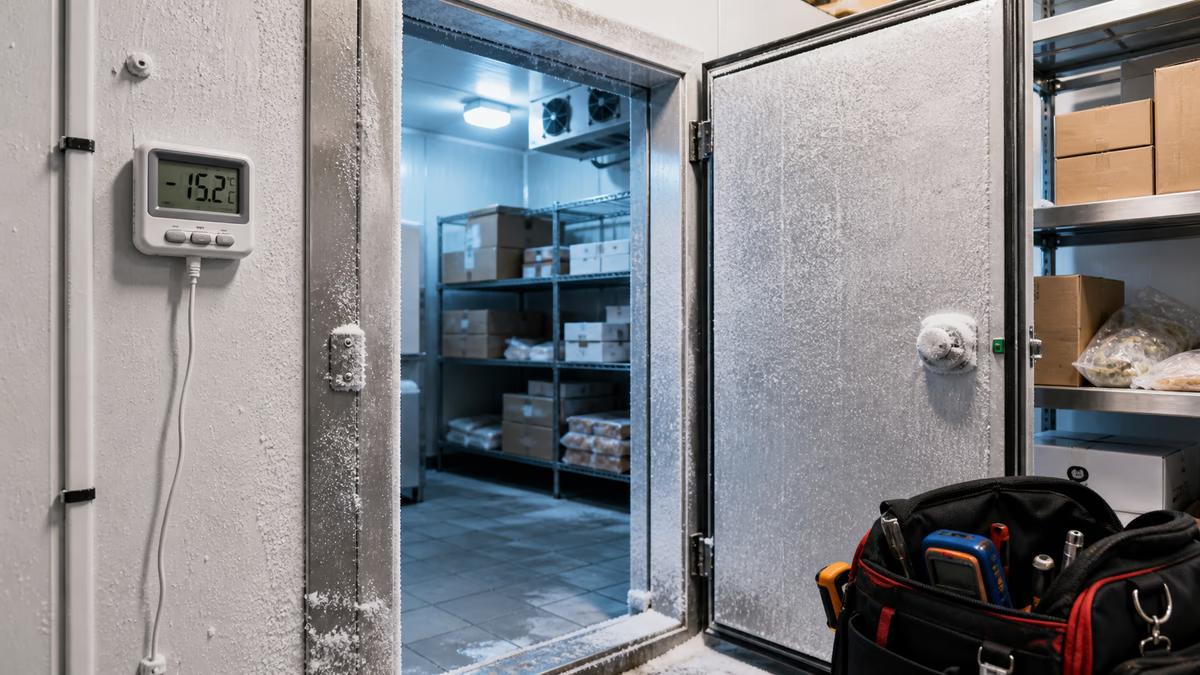
A rising walk-in freezer temperature is a food-safety and inventory risk. Keep doors closed as much as possible, monitor product temperatures closely, and work this triage list top to bottom; the fastest, cheapest causes are first. If you reach the bottom without a fix, call for emergency repair.
Check these first, in order
| Step | What to check | Why it matters |
|---|---|---|
| 1 | Door, gasket, and strip curtain | A door left ajar or a torn gasket dumps cold air fastest |
| 2 | Condenser coils (clean?) | Dirty coils can’t reject heat → temp climbs |
| 3 | Evaporator coils (iced over?) | Failed defrost insulates the coil |
| 4 | Refrigerant lines (hissing/oily) | A leak starves the system |
| 5 | Thermostat / controls | Wrong setpoint or failed control |
1. Door, gasket, and strip curtain
Start here — it’s the most common and the cheapest. A door that doesn’t seal, a cracked gasket, or missing strip curtains let warm, humid air pour in. This also ices up coils and overworks the compressor.
2. Condenser coils
If the condenser is caked in dust and grease, the freezer can’t reject heat and the box steadily warms. Power down and clean the coils — a fix you can often do yourself.
3. Evaporator coils and defrost
Open the box and look at the evaporator. A coil buried in ice means the defrost system has failed and the coil can no longer pull heat out of the air. That’s a technician repair (defrost timer, heater, or termination thermostat).
4. Refrigerant
Low refrigerant means weak or no cooling. Refrigerant only drops if there’s a leak — this needs an EPA-certified tech to find, seal, and recharge.
Protect the product while you wait
Keep the door shut, don’t load warm product, and log the temperature. Frozen food should typically be held at 0°F or below. If product has thawed, reached unsafe temperatures, or if there is uncertainty about how long temperatures were out of range, follow your internal food-safety procedures and local health department guidelines.
If you are unsure whether food remains safe for consumption, consult your food-safety manager or local health department guidance.
When to call now
If the box keeps warming after you’ve confirmed the door seals and cleaned the condenser, treat it as an emergency — every hour raises the odds of total inventory loss.
FAQ
How fast can someone get here? ColdPros offers same-day and emergency commercial refrigeration service whenever availability permits. Businesses with product at risk are prioritized whenever possible.
What will the visit cost? A flat $125 service/diagnostic fee; the repair is quoted on-site first.
ColdPros provides 24/7 emergency walk-in cooler and freezer repair across the Denver metro. Request emergency service or call (720) 902-8090.